the exhibition continues ↓

Built

The collection.

These are three pieces the studio has already built, and all of them are live and running. Open one for the full story, or press the link to see it yourself.

Piece i · live

BSF Organic Farms

This site sells oyster shell grit for poultry direct from the producer, in grades and pack sizes from a 500 gram pouch up to bulk by the tonne. Card payment is taken on the site, and flat-rate Express Post is worked out before anyone reaches the end of the checkout.

Built: product catalogue · card payments · shipping · order pipeline
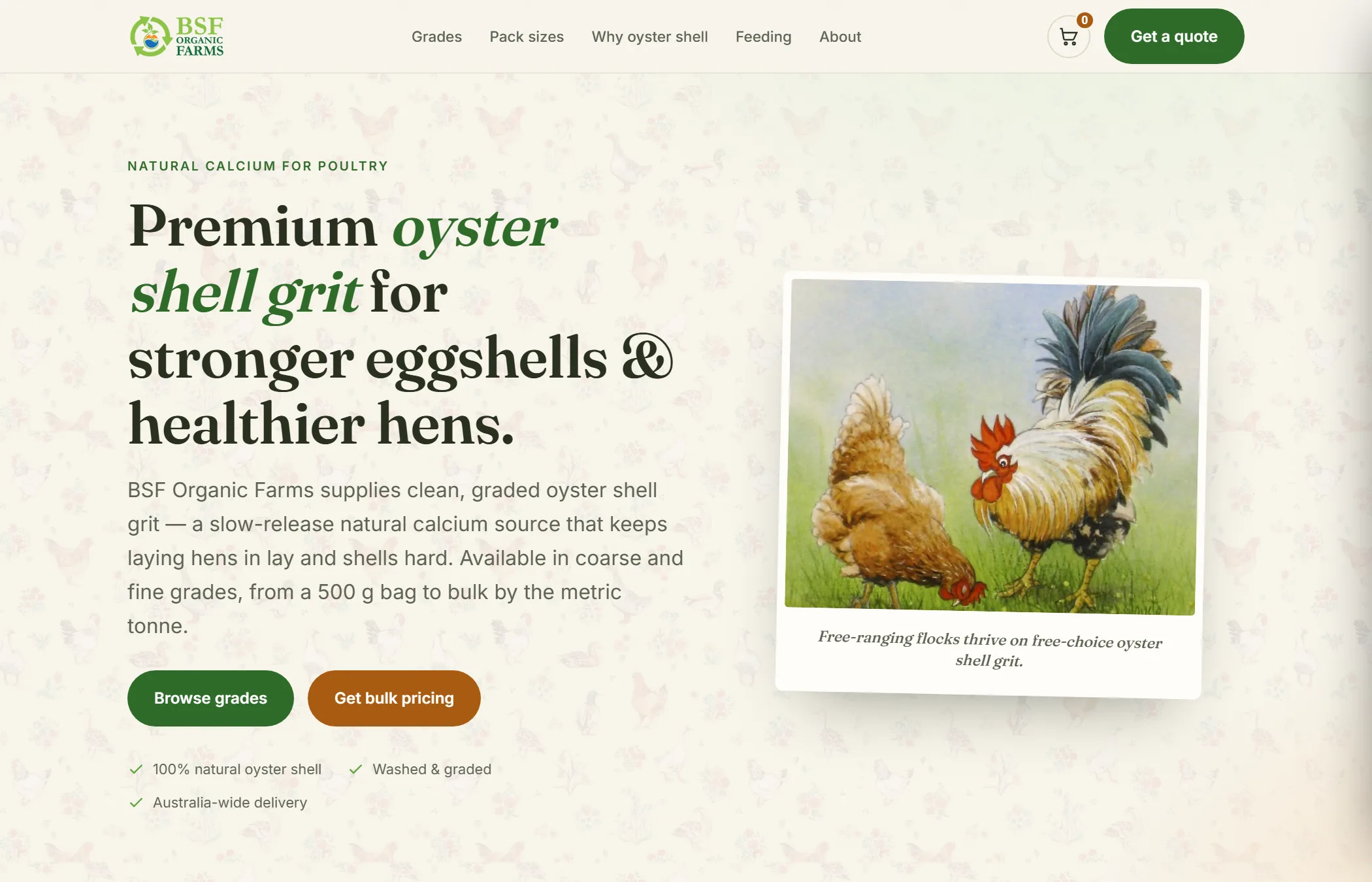
BSF Organic Farms on a desktop screen: the shop's home page with grades, pack sizes and a cart
desktop
BSF Organic Farms on a phone: the shop's home page and cart button
phone

What it is.

It's a working shop for a small producer, with the grit sold in two grades and in pack sizes from a resealable 500 gram pouch for a backyard flock up to bulk for a commercial shed. Customers browse, add to the cart, see the postage and pay by card, and the order arrives with the producer ready to pack. There is no marketplace or middleman in between, and no monthly platform fee to pay.

What was built.

  • A product catalogue with grades and pack sizes, and a bulk-pricing enquiry for the larger quantities
  • A cart and checkout that take card payments through an Australian payment gateway (the service that processes the card)
  • Flat-rate Express Post shown before checkout, so nobody is surprised by the postage at the last step
  • An order pipeline (every order is recorded and confirmed, with the details the producer needs to fulfil it)
  • Feeding guides and a plain explanation of why to use oyster shell, written for people who keep hens rather than for chemists
  • Terms, returns and shipping pages written to sit correctly with Australian Consumer Law

Why it matters for your site.

If you sell a physical thing, the part that matters once it's online is whether the money actually arrives and the order actually reaches you. This piece is the studio's proof that a small business can take real card payments on its own site, own its customer records, and never pay a marketplace to stand between it and its buyers.

bsforganic.com.au ↗

Piece ii · live

The Clearance Rate

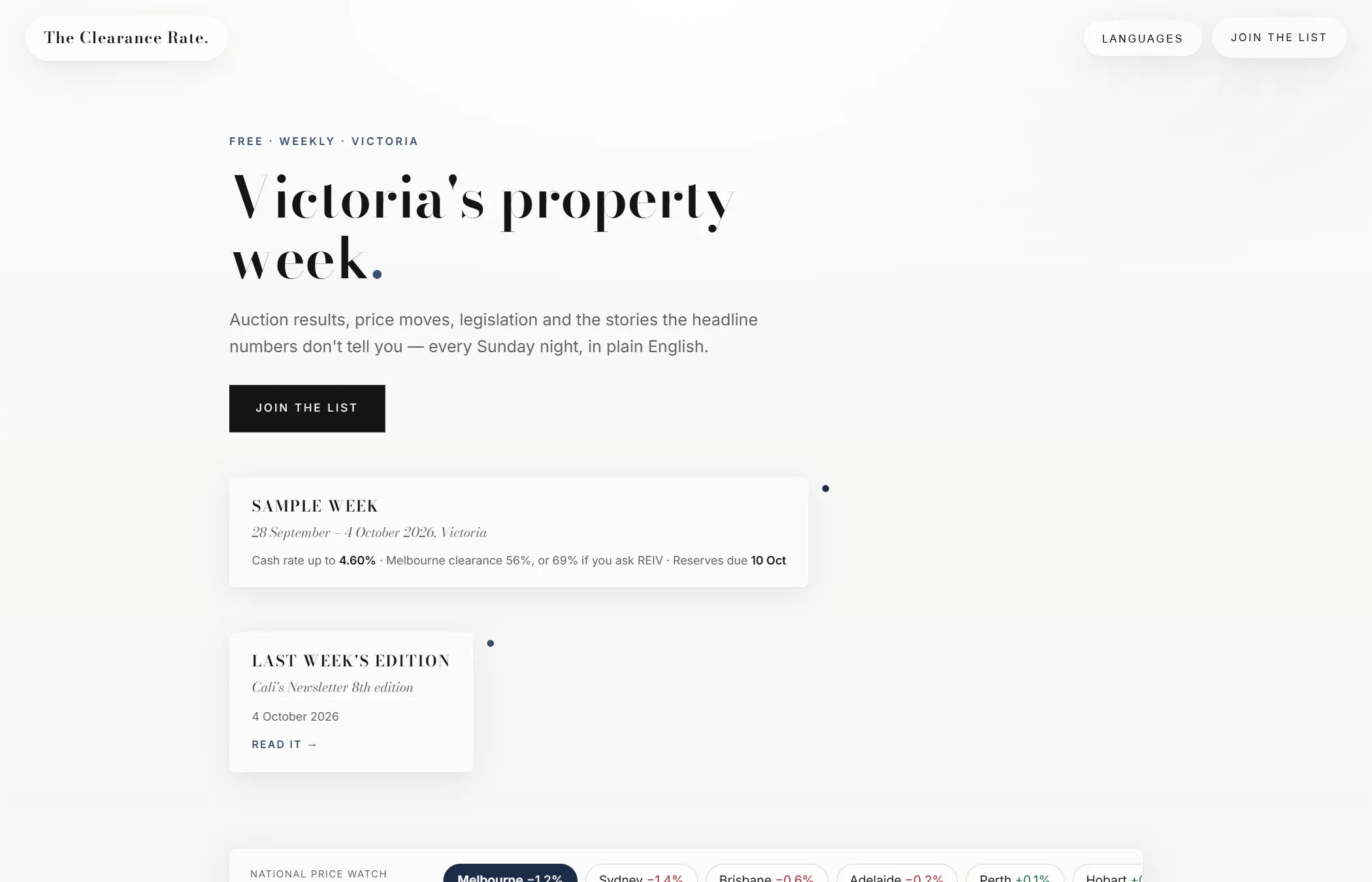
The Clearance Rate is a weekly property newsletter for Victoria that puts auction results, price movements and legislation into plain English. When someone subscribes, they are added to a database, past editions can be read without leaving the page, and the whole site is also available in a second language.

Built: subscriber pipeline · database · second language · private admin

The Clearance Rate on a desktop screen: a newsletter landing page with a sign-up form and a sample week of Victorian property figures
desktop
The Clearance Rate on a phone: the join-the-list form and this week's clearance figure
phone

What it is.

Every Sunday night the newsletter explains Victoria's property week without the jargon, covering the Melbourne clearance rate (the share of auctions that ended in a sale), listing counts and the price watch by suburb and region. It also covers everything legal that touches property, whether it comes out of Spring Street (the Victorian Government) or Canberra, with a corner for the week's underquoting cases (homes advertised below their likely price) and builder bans. It's written for people who want to understand the market without being sold to by it.

What was built.

  • A sign-up form that saves straight to a database the owner controls, with consent recorded and an unsubscribe that works, as the Spam Act (Australia's law on marketing emails) requires
  • An edition reader (the panel that opens past editions on the page itself), so the archive can be browsed without leaving it
  • A sample week on the landing page (the page visitors arrive on), so a visitor sees exactly what they would be getting before they give an email address
  • A language switch that applies to the whole site, for readers whose first language is not English
  • A private admin page for the owner to see who has joined
  • A privacy policy written around what the site actually collects

Why it matters for your site.

If you want to keep in touch with your customers, you need a list that belongs to you rather than to a platform, consent that holds up under Australian law, and a way for people to leave. This piece is the studio's working example of all three, and of a site that speaks more than one language without a bolted-on translation tool.

calisnewsletters.com ↗
Piece iii · live

Picture This

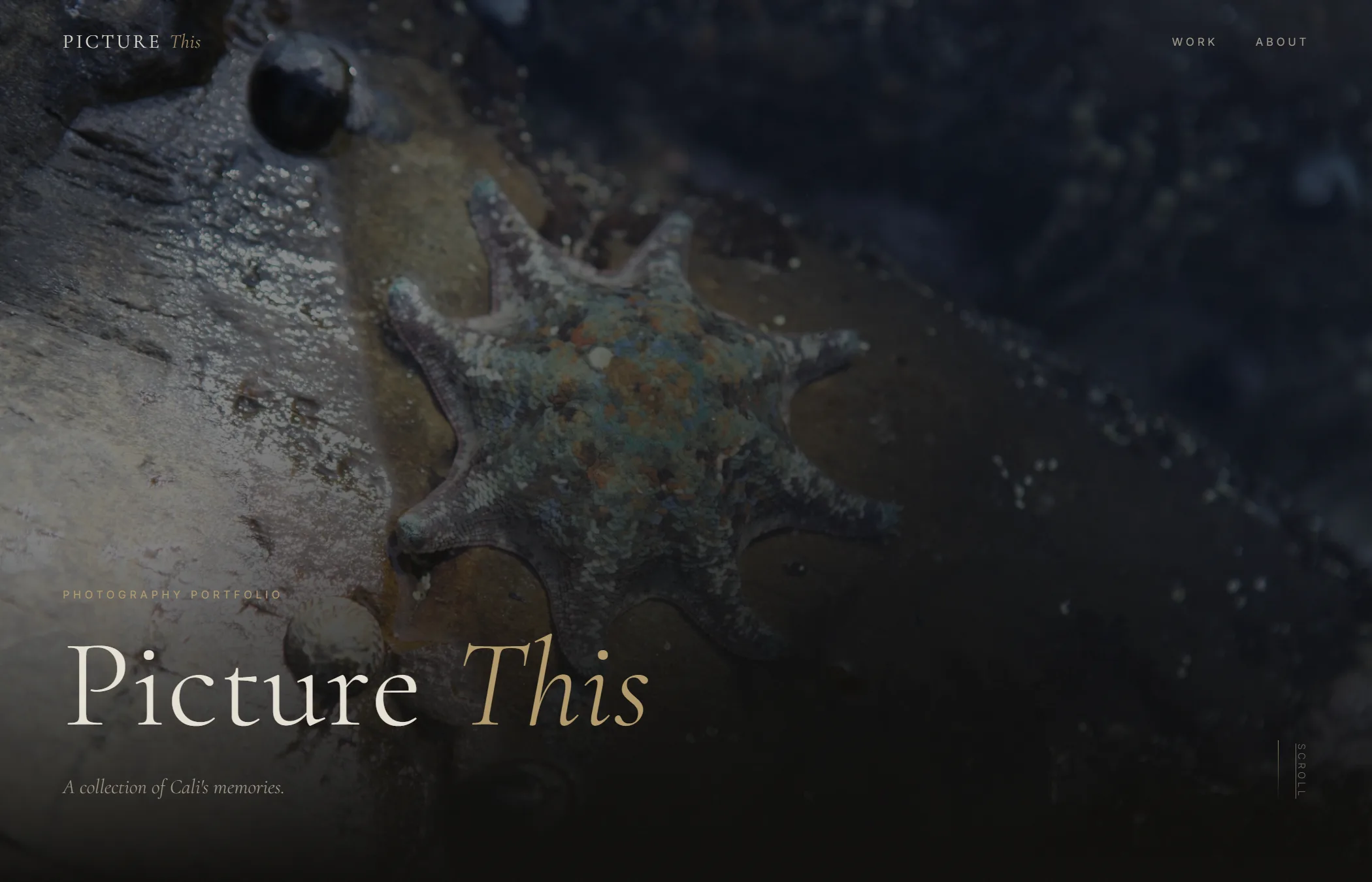
Picture This is a photography portfolio of the studio’s own photographs, with a growing set of works sorted and captioned, and the grid, the pacing and the captions were all made for these particular pictures.

Built: custom gallery grid · categorised works · image pipeline

Picture This on a desktop screen: a dark gallery grid of photographs with captions
desktop
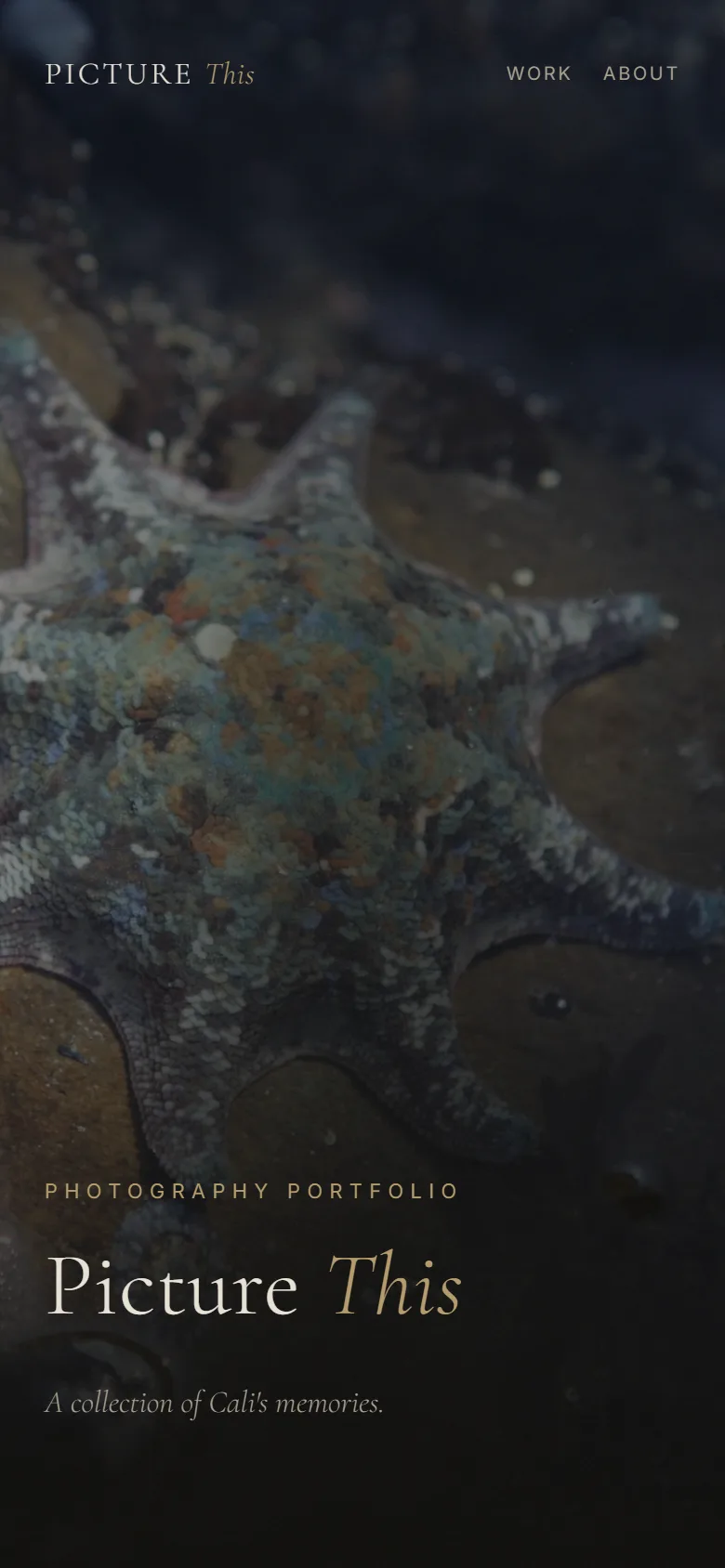
Picture This on a phone: photographs stacked with their captions
phone

What it is.

It's a place for a body of photographs to be looked at slowly. There are portraits, landscapes, flora, still life and field notes, and each picture has a caption in the photographer's own words instead of a filename. The site is deliberately quiet, with no shop, no contact form and nothing asking for anything, because the pictures are the point.

What was built.

  • A custom gallery grid that gives each photograph the room its proportions need, rather than forcing every image into the same square
  • The works sorted into categories, with captions written for each
  • A lightbox (a view that opens a single work at full size), with keyboard and swipe navigation
  • An image pipeline that keeps the pictures sharp on a phone without making the page slow to load
  • A layout that reads like a gallery wall on a desktop and like a hand-held album on a phone

Why it matters for your site.

If your business is visual, whether that is photography, food, interiors, tattoos, flowers or finished jobs on a worksite, the way the pictures are presented is most of the site. This piece is the studio's proof that a set of images can feel like someone chose and arranged them on purpose, and that a gallery can be fast on a phone.

picturethis-dng.pages.dev ↗

*Live links open in a new tab, and the rest of the studio’s work is shown on request.

What's included

The works.

Every site arrives finished and ready to use from day one.

The essentials

Your domain, hosting and business email, registered in your name, set up, paid for and watched so nothing quietly expires.

Copywriting

Drafted from a conversation about your business, then revised until it sounds like you.

A privacy policy

Drafted plainly, around what your site actually collects, with the standing advice to have a lawyer check it.

Search foundations

Titles, descriptions, a sitemap and proper link previews, so the site is findable from day one.

Two years of care

Bug fixes, detail changes and seasonal dressings, included for the first two years of every build.

The handover

Every login, in a folder, in your name, and yours to keep forever.

Your own systems

Dashboards, bookings, shops and private logins, quoted and added as your business needs them.

Brand, print and audits

Logos, brand boards, printed material and a proper look at your market, each quoted on its own.

See the complete list

Everything the studio has actually built and launched, so none of it is wishful thinking. included comes with every build at no extra cost; quoted is set out in writing before work begins.

Websites

Ground-up buildquoted
A complete site from a blank page, covering strategy, copy (the words on your site), design, build and launch.
Total rebrandquoted
An existing site and its tangled history get sorted through and rebuilt properly, with the migration (moving everything across) handled end to end.
Piece by piecequoted
One page, built properly, for a one-person business run from a phone, with room to grow later at its own pace.
Minor worksquoted
Smaller changes, refreshes, or taking over the keys to a site somebody else built.
Landing pages and campaign micrositesquoted
A single page for a launch, an event or an offer.
Signature interactionsincluded, within taste
Custom backgrounds, canvas work (artwork drawn in code), animation and a proper 404 (the broken-link page), all taken from your own trade so the site feels like yours.

Getting online, the boring parts organised

Domain research and registrationincluded
The right domain (your web address) is found and registered in your name with your ABN, with auto-renew set so it can never quietly lapse.
Hosting and DNSincluded
Fast global hosting (where the site lives online), configured and paid for, free for the first two years of every commission.
Business emailincluded
A real address at your domain that forwards to the inbox you already use, set up so replies come from the business. A full mailbox is available if you want one.
SSL and securityincluded
HTTPS (the padlock in the address bar) from day one, with the renewal looked after and in the calendar so your site never becomes a browser warning.
Account ownership done rightincluded
Every account is created in your name, with the studio added as a delegate (a helper you can remove). You own everything, forever, and can remove the studio in one click.

Legal pages

Privacy policyincluded
Plain English, specific to what your site actually collects, written with Australian law in mind. The studio drafts the structure, you sign off the facts, and the standing advice is to have a lawyer review it at some point.
Terms and conditionsquoted
For anything that sells, books or takes payment.
Returns, refunds and shipping pagesquoted, required for shops
Written to never contradict Australian Consumer Law.
Honest consentincluded
A cookie banner (the "accept cookies" pop-up) only if there is genuinely something to consent to. Most small sites don't need one, and the absence is documented.

Owner-side software

This is the part most designers cannot do, and it is what turns a brochure into a business.

Enquiry dashboardsincluded with any form
A password-protected page of your own where form submissions land, so you can read them, sort them and mark them handled without inbox chaos or a third-party subscription. The studio runs its own commissions through one.
Order and payment flowsquoted per shop
Cart, checkout and card payments through an Australian gateway (the service that processes cards), with order records and a confirmation step. It is live and taking money on a producer's store today.
Booking and request systemsquoted
Date and time requests feeding your dashboard or calendar.
Job application portalsquoted
Application forms that you review from your own side, including bilingual builds. An English and Korean portal is live for a Melbourne trade business.
Client and staff loginsquoted
Private areas where customers see their own orders or progress, or where a team finds rosters and documents.
Databases, owned by youincluded with any of the above
Submissions are stored properly, can be exported, and are yours.

Words

Copywritingincluded
Drafted from a conversation about your business, revised until it sounds like you.
FAQ writingincluded
The questions you actually get asked, answered in your voice. These usually become the most valuable part of a site.
Photography directionincluded
What to shoot, how and on what, written as shot lists you can follow on a phone, with shooting by arrangement.

Brand and print

Logo and mark systemsquoted
Primary mark, lockups (logo and name together), favicon (the browser tab icon) and a usage sheet.
Brand boardsquoted
Colour, fonts, motif and voice on one page, so everything the business makes matches.
Business cards, stationery, pamphlets, postersquoted
Print-ready artwork that matches the look of the site, with printer specifications attached.
Social profile kitsquoted
Profile pictures, banners and post templates that match the site.

Shops

Small shops done properlyquoted per shop
Product pages, a cart and payments, with shipping shown before checkout and prices that include GST.
Shopify buildsquoted
A custom theme (the store's design), or a fully custom front end (the part customers see) for brands that don't want to look like Shopify.
Product data and migrationquoted separately, always
Whatever spreadsheet exists gets turned into a clean catalogue, with images processed in bulk.

Being found

Local search foundationsincluded
Titles, descriptions, structured data (labels search engines read), a sitemap (a list of your pages), and a Google Business Profile set up and linked.
Share-ready everywhereincluded
Proper link previews for every page, because small-business marketing is mostly people sending links.
Market and competitor auditsquoted, also sold on its own
Every competitor's site gets read, examined and compared, to show what the market does, what nobody does and exactly where you can be different. Sixteen competitors were audited for one client before any design work began.
Site auditsquoted
An existing site examined end to end, with a ranked list of fixes, which makes it a natural first job.

The uncommon ones

Rescuesquoted
For sites held hostage by an old developer, expired security certificates or lost logins, which get recovered, stabilised and put back in your name.
Multilingual buildsquoted
Full second-language versions of the site, never a machine translation added afterwards.
Accessibility passesquoted
Contrast, keyboard and screen-reader basics brought up to standard.
The handoverincluded, always
Every commission ends with a bound dossier that sets out what you own, every login, what the studio can access and why, how to remove us, and what to do when something breaks.
How it works

How it works.

Most people asking for a website have never commissioned one before, and the not-knowing is half the worry. Here is the whole thing, start to finish, and it starts with a free quote.

You write

A few sentences through the enquiry form, or the longer brief if you want to tell the whole story. You'll hear back within 48 hours, then one conversation about what you do and who buys from you.

The studio goes in deep

Your competitors get read properly, your target market gets worked out, and what those people actually respond to, before a number goes near anything. That research shapes the quote, and later it shapes the site.

You get it in writing

A free quote, fixed once you accept it. Nothing is charged by the hour, and anything genuinely new along the way is quoted as its own piece, so you decide.

It gets built, in the open

You see the site as it comes together and say what you think along the way, so nothing launches that you haven't looked at. The boring parts, your domain, hosting, SSL and email, all get done properly and included.

The handover

Every login, in a folder, in your name, with what the studio can access and why, and how to remove it. You own everything, forever.

Two years of care

Bug fixes, detail changes and seasonal dressings, included from launch. After that, care continues on the plan in your quote.

The quote is free, and so is saying no to it.

The studio

A small practice, on purpose.

SBRINZ is one designer working in Melbourne, and the studio takes on one build at a time and treats each one as the main event. That means every site is built by hand, watched after launch and never handed to a junior, because there isn't one.

The studio is currently exhibiting this site.

Aftercare

The keeping.

After your two included years, care continues for less than a coffee habit, on a yearly plan quoted with your build.

Care

  • Bug fixes, as they're found
  • Contact & detail updates
  • Seasonal dressings (the site decorated for Christmas, Easter and Halloween)

Care, extended

  • Everything in Care
  • Seasonal dressings for more occasions through the year
  • An annual performance tune-up
  • A yearly SEO pass (how the site shows up in search)
Questions

Asked, frequently.

How long does a build take?

A ground-up build typically runs four to six weeks from the first conversation to launch, and minor works are usually finished inside a fortnight. The studio only holds a few projects at a time, so nothing sits in a queue.

What does a website cost?

Every job starts with a free, in-depth quote worked out from your market, and the number is fixed once you accept it, so nothing is charged by the hour and nothing turns up later. Your domain, hosting and care are free for the first two years.

Do I need to write my own copy?

No, copywriting is included in every build, so the studio drafts it from a conversation about your business and then revises it until it sounds like you.

Why “SBRINZ”?

The name is Swiss, and what matters to the studio is the standard behind it. The brief (what you asked for) is treated as a starting point and every project gets an extra pass, which covers the detail nobody asked for and a second look after it already works. Deadlines are set internally, ahead of the date you are given, so the work has a habit of arriving early.

Correspondence

Enquiries open.

The studio works with small businesses across Melbourne and Victoria, and if you are not sure what happens next, here is how a commission runs.